What is in the bag
- Buffered Coco Coir <3mm screenedMoisture retention and an easy-to-rewet base30%
- Fine Orchiata Pine Bark 4–8mmStructure and air at root scale; slow to break down25%
- Coarse Perlite 3–6mmPermanent air space; stops the coir compacting20%
- Coco Husk Chips 6–10mmStored water with open channels between chips10%
- Organic Worm Castings <2mmSteady nutrition and microbial life10%
- Horticultural Charcoal 3–6mmRigid pores that keep the mix fresh over time5%
| Physical metric | Value | What it means |
|---|---|---|
| Air-filled porosity | 24% | Share of the pot volume holding air after a full watering has drained |
| Water-holding capacity | 52% | Share of the pot volume holding water at container capacity |
| pH range | 5.8–6.5 | Measured in a 1:1.5 water extract after blending |
| Particle grading | 0.5–10mm | Screened range of the structural fraction |
| Starting EC | 0.4–0.8 mS/cm | Low enough for tissue-culture and freshly cleaned roots |
Who it is for: root morphology
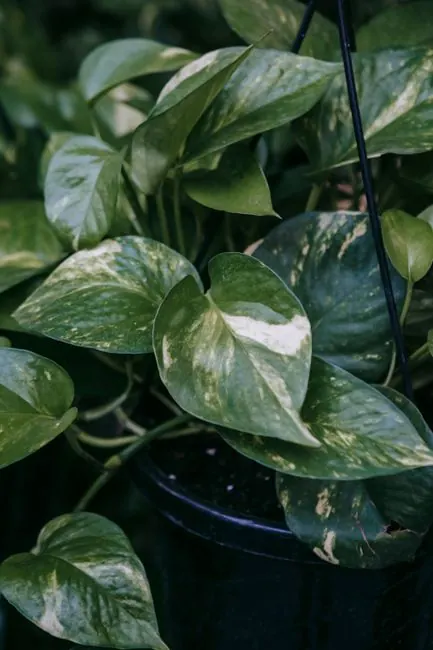
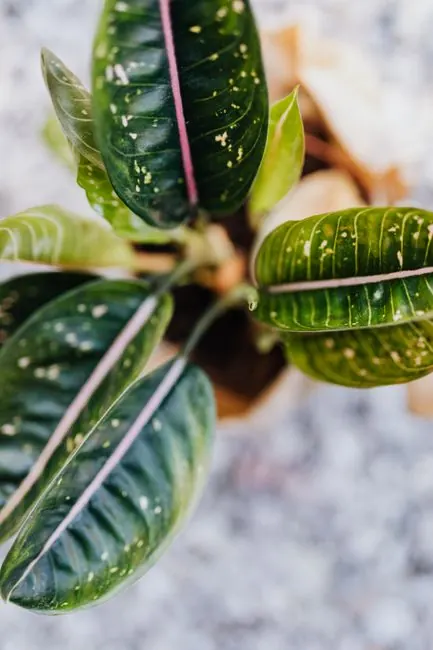
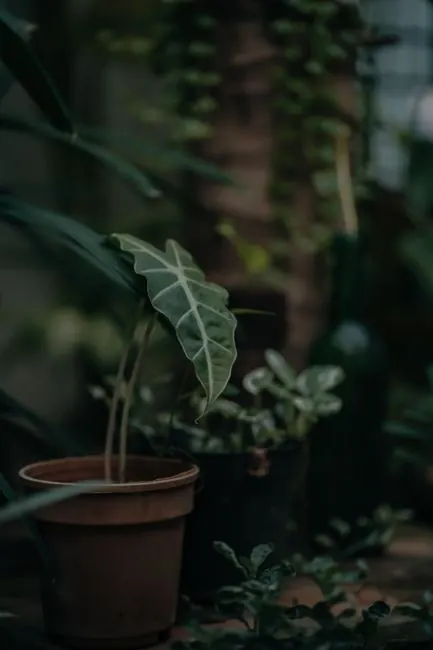
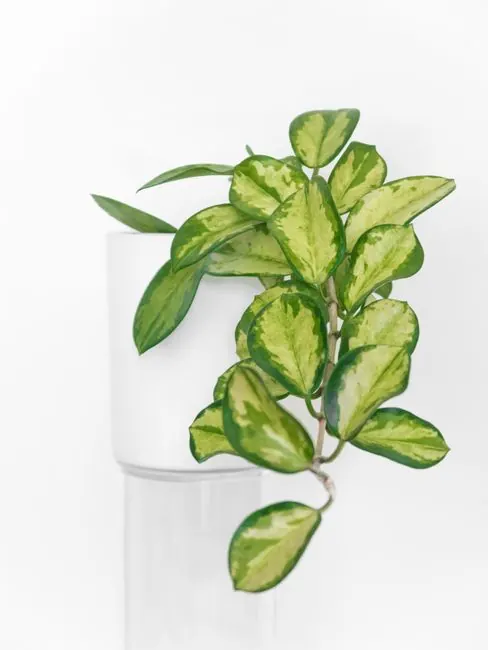
The plants this mix is designed for are mostly vigorous, forgiving growers with mixed root systems: fine fibrous roots for uptake plus moderately thick anchoring roots. Epipremnum and Syngonium are climbing aroids, like Monstera but faster growing and less fussy, with roots that tolerate a wider range of moisture. Ficus and Dracaena form woody, branching root systems; Chlorophytum has thick, white, water-storing roots; Peperomia and Pilea have fine, shallow roots that rot if kept wet.
What they share is a preference for a mix that holds moisture evenly but still breathes, and a tendency to be grown in rooms where light, temperature and watering habits vary a great deal through the year.
Plants this blend suits: Epipremnum aureum, Epipremnum 'Marble Queen', Epipremnum pinnatum 'Cebu Blue', Scindapsus pictus 'Exotica', Syngonium podophyllum, Syngonium 'Pink Splash', Chlorophytum comosum, Ficus elastica, Ficus lyrata, Peperomia obtusifolia, Pilea peperomioides, Dracaena fragrans, Dracaena marginata, Spathiphyllum, Aglaonema 'Silver Bay', Tradescantia zebrina, Philodendron hederaceum.
Why this formulation works
Most houseplants on British windowsills are sold in, and stay in, a peat-based or green-waste compost that holds plenty of water but very little air once it settles. That works in a glasshouse with fast-drying conditions and expert watering. In a living room in February, the same compost can stay wet for weeks, and the result is the familiar pattern of yellow lower leaves, a sour smell and fungus gnats. The Everyday mix is designed as a direct replacement: an AFP of 24% means roughly a quarter of the pot is still air after watering, around three times what slumped multipurpose compost provides, while a WHC of 52% stops the pot drying out too fast in a sunny or centrally heated room.
The recipe is simple and robust. Buffered coco coir forms the moisture-holding base; it rewets easily even if the pot has dried out, unlike peat, which turns water-repellent when dry. Fine 4–8mm bark and coarse perlite provide structure and air at a scale that suits the fine and medium roots of most common houseplants. Coco husk chips add water storage without fine particles, and 5% charcoal adds rigid pores that resist compaction. Worm castings at 10% supply a gentle, steady nutrient release and an active microbial population, so newly potted plants can go four to six weeks without feeding.
This blend is also the base of our raw components range. Because it sits in the middle of our AFP spectrum, it can be adjusted easily: add one part pumice or perlite to four parts mix to move towards an aroid blend for Monstera or Philodendron, or one part vermiculite to four parts mix for thirsty ferns. Many of our trade customers use it as a house mix for general stock and adjust it for specific plants on the bench.
For most homes, the Everyday mix is the easiest change you can make to reduce plant losses. It holds water for long enough to forgive the occasional missed watering in summer, but drains and breathes well enough to forgive overwatering in winter. Combined with clear slotted pots, which let you see the moisture and root growth through the side, it takes most of the guesswork out of watering.
When and how to repot
- Repot in spring or summer when roots circle the pot or grow from the drainage holes, typically every 12–24 months for most common houseplants.
- Lightly moisten the mix before use so it is damp but crumbly.
- Water the plant the day before repotting so the root ball comes out cleanly.
- Remove the plant and loosen the outer roots with your fingers. If the old compost is heavy and wet, gently remove as much of it as you can from around the roots.
- Choose a pot 2–4cm wider than the root ball with good drainage. Add a layer of mix to the base so the plant will sit at its original depth.
- Fill around the root ball, tapping the pot to settle the mix and firming lightly with your fingertips.
- Water thoroughly until it drains from the base, empty any saucer or cachepot after 15 minutes, and return the plant to its usual position.
Open the repotting calculator pre-set for Everyday Houseplant Mix to work out litres, bag sizes and pot sizes for your whole collection.