What is in the bag
- Fine Orchiata Pine Bark 4–8mmOpen structure at a scale that fine roots can colonise25%
- Buffered Coco Coir <3mm screenedEven moisture film; calcium-buffered so it does not strip calcium and magnesium25%
- Coco Husk Chips 6–10mmInternal water storage with air between chips15%
- Coarse Perlite 3–6mmKeeps the coir fraction from collapsing into a dense block15%
- Vermiculite 2–4mmHolds water and potassium in its layered plates; high CEC10%
- Volcanic Pumice 3–6mmWeight and permanent porosity at the base of the root ball5%
- Organic Worm Castings <2mmMicrobial inoculum and gentle background nutrition5%
| Physical metric | Value | What it means |
|---|---|---|
| Air-filled porosity | 26% | Share of the pot volume holding air after a full watering has drained |
| Water-holding capacity | 54% | Share of the pot volume holding water at container capacity |
| pH range | 5.8–6.4 | Measured in a 1:1.5 water extract after blending |
| Particle grading | 0.5–10mm | Screened range of the structural fraction |
| Starting EC | 0.5–0.9 mS/cm | Low enough for tissue-culture and freshly cleaned roots |
Who it is for: root morphology
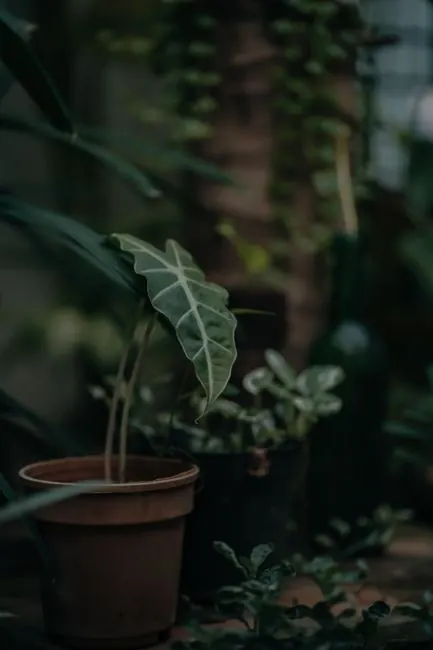
Alocasia grows from an upright rhizome, often called a corm, that stores starch and water. From its base it throws out a dense mat of fine, white, unbranched feeder roots, usually 1–2mm thick, which turn over quickly. In good conditions a healthy Alocasia can fill a 12cm pot with roots in a single summer; under stress, after transit or a cold night, it will drop many of those roots and a leaf or two, then regrow both from the corm. Fine roots have a large surface area and dry out fast, but they also suffocate fast, which is why this genus punishes both extremes.
Many species also produce small corms (cormlets or bulblets) around the base of the main corm and in the root ball. These are propagation material, and they are your insurance policy: a mother plant that collapses from rot can often be restarted from cormlets set into moist sphagnum or this mix in a sealed propagation box.
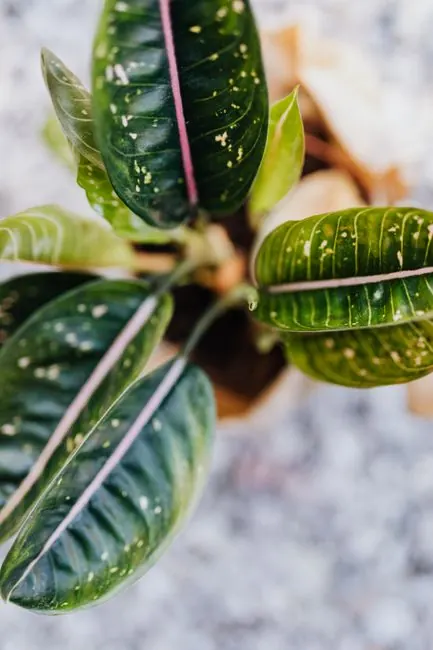
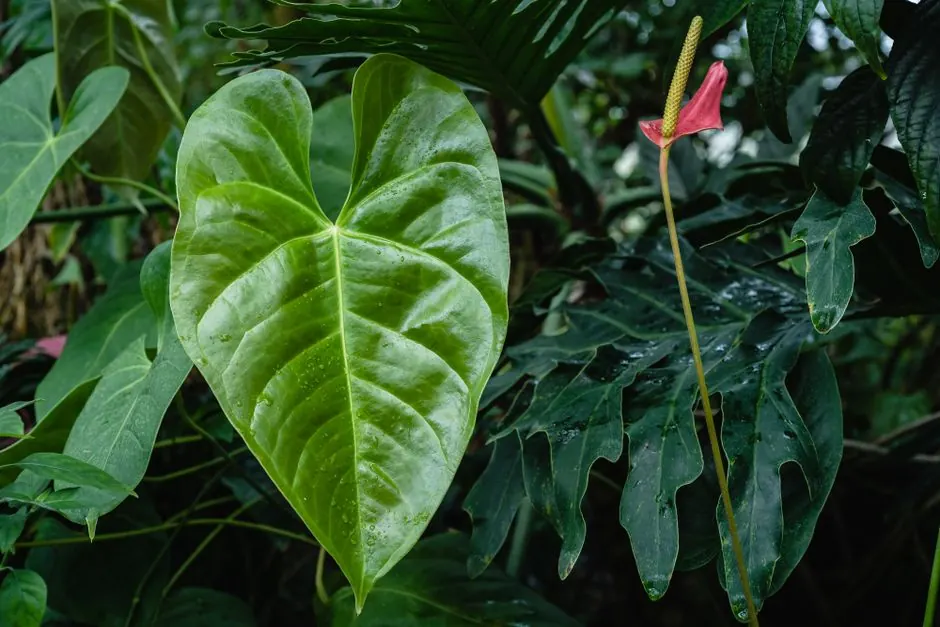
Plants this blend suits: Alocasia micholitziana 'Frydek', Alocasia 'Frydek Variegata', Alocasia 'Jacklyn', Alocasia baginda 'Dragon Scale', Alocasia baginda 'Silver Dragon', Alocasia cuprea, Alocasia zebrina, Alocasia reginula 'Black Velvet', Alocasia 'Polly', Colocasia esculenta, Xanthosoma, Aglaonema, Dieffenbachia.
Why this formulation works
An Alocasia mix has to do two contradictory things: hold an even film of water around very fine roots, and still leave enough air that those roots and the corm do not sit in an oxygen-starved core. Our answer is an AFP of 26% with a WHC of 54%. That is deliberately lower in air and higher in water than our Monstera blend, because a feeder-root mat dries out in hours in a room heated to 21°C, and a dried-out Alocasia answers by dropping roots and inviting spider mites. But it is still more than three times the air of a typical multipurpose compost, which is the margin that keeps the corm firm.
The water-holding side is carried by buffered coco coir, vermiculite and coco husk. Coir straight from a coconut husk carries potassium and sodium on its exchange sites; put it in a pot unbuffered and it grabs calcium and magnesium from your feed, which shows up weeks later as distorted new leaves and brown leaf margins. Our coir is pre-treated with a calcium solution that displaces the potassium and sodium and is then rinsed, so it arrives at an EC below 0.5 mS/cm and stays neutral towards your fertiliser. Vermiculite adds water held between its expanded mica plates plus a high CEC that holds potassium, an element Alocasia uses heavily to build its large, rigid leaves.
Structure comes from fine 4–8mm bark, perlite and a little pumice. Particle size is the point here: bark chunks of 12–18mm leave gaps too large for fine roots to bridge, so roots dry out between chunks, whereas 4–8mm bark gives air pockets at a scale feeder roots can colonise. Coir on its own slowly settles into a dense block over 12–18 months; the perlite and bark prevent that collapse, and the 5% pumice sits towards the base of the root ball where the perched water table is highest. We keep worm castings to 5% so that decomposition, and the oxygen demand of the microbes doing it, stays low around the corm.
In UK homes the biggest risk for Alocasia is autumn. As light falls in October, many species slow down or go semi-dormant, and the same watering routine that suited August now drowns a plant using a third as much water. In this mix, reduce watering until the top 3cm is dry before you water again, keep the plant above 16°C and away from cold glass at night, and resist repotting a sulking plant in winter. Spider mites thrive in the dry air of centrally heated rooms; a moister root zone keeps leaves turgid and less attractive to them, and predatory mites such as Amblyseius swirskii do the rest.
When and how to repot
- Repot in late spring or summer when the plant is actively putting out new leaves. Avoid repotting from October to February unless you are dealing with root rot.
- Moisten the mix until a squeezed handful holds together but releases only a drop or two of water. Coir-based blends wet unevenly if they go into the pot dry.
- Slide the plant out and gently loosen the outer roots. Check the corm: it should be firm, like a raw potato. Cut away any soft, dark or foul-smelling tissue with a clean blade and let cut surfaces dry for an hour.
- Collect any cormlets you find in the old root ball and set them aside for propagation in moist sphagnum or a sealed tub of this mix.
- Choose a pot only 2cm wider than the root ball; Alocasias root fastest and stay healthiest slightly under-potted. Clear slotted pots let you see when roots reach the sides.
- Set the corm at the same depth as before, with its top at or just above the surface. Burying the corm deeper is the commonest cause of rot after repotting.
- Backfill, tap the pot to settle the mix, water once until it drains, and keep the plant warm (18–24°C) and in bright, indirect light while it re-establishes.
- Expect one older leaf to yellow in the following fortnight as the plant rebalances; remove it once fully yellow and begin half-strength feeding after a month.
Open the repotting calculator pre-set for Alocasia & Corm Mix to work out litres, bag sizes and pot sizes for your whole collection.