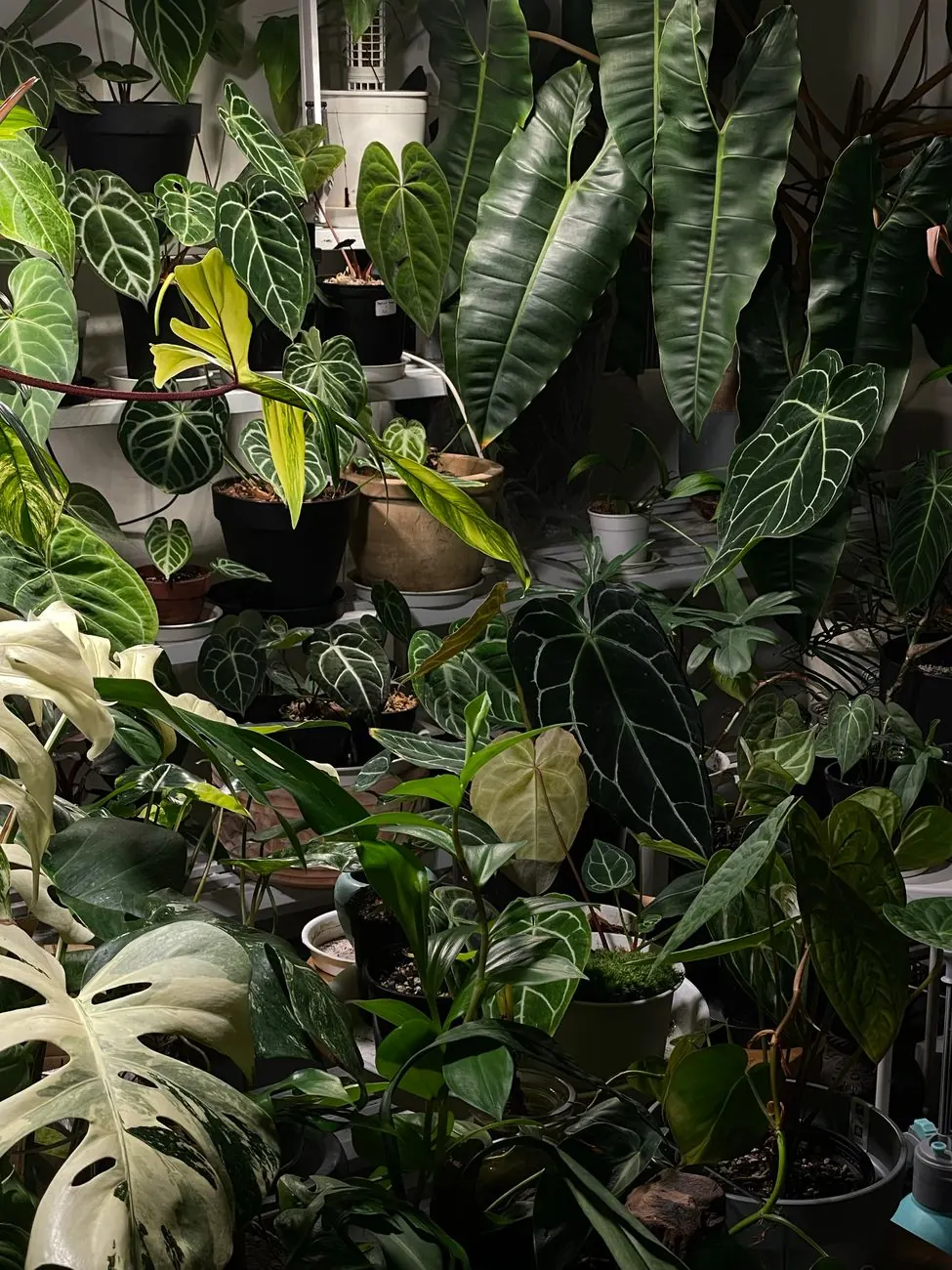
A nursery that grows thousands of plants produces some that are healthy but not pretty enough to photograph and sell individually. Rather than compost them, we sort them into rescue boxes. We are specific about what imperfect means, because a box is only good value if you know what you are getting. You choose the tier; we choose the plants from what is on the benches that week.
What makes a plant imperfect
Plants go into rescue boxes for these reasons:
- Cosmetic leaf blemishes: a torn or creased leaf, brown tips from a dry spell, a sunscorched patch, or old feeding scars from a pest outbreak that has since been cleared by predatory mites.
- Lopsided growth: plants that sat at the edge of a bench and leaned towards the light, or lost a leaf on one side.
- Overstock: plants that outgrew their size grade before selling, so they are slightly too big for their pot or label.
- Variegation drift: variegated plants with a reverted green leaf, an all-white leaf or uneven sectoring that we would not photograph as a specimen.
- Leaf loss after repotting: plants that dropped an older leaf when moved on but are rooting well.
Every damaged leaf on the plant is a leaf that grew before the problem was fixed. New growth on these plants is normal.
What never goes in a box
We do not box plants with active pests, root rot, viral symptoms, or anything we would not pot on ourselves. Every plant is root-checked through its clear pot, passes the same biosecurity inspection as our full-price stock and carries a UK Plant Passport. Rescue boxes are covered by the same 7-Day Live Arrival Guarantee: if a plant arrives dead or with a problem beyond the cosmetic, report it with photos within seven days.
What each box contains
The Classic 3-Plant Box, £15, holds three plants in 9–12cm pots from easy genera such as Epipremnum, Scindapsus, Syngonium, Philodendron hederaceum, Calathea or Aglaonema. You can request a pet-safe or low-light selection when ordering. The Rare Aroid Rescue Box, £35, holds two or three collector aroids in 9–12cm pots, such as velvet Philodendrons, jewel Alocasias or Anthuriums. The Variegated Specimen Rescue Box, £90, holds one or two variegated plants in 12–15cm pots, such as a Thai Constellation with a torn leaf or a Frydek Variegata with a reverted sector. Each box is priced well below what the same plants would cost unblemished, and contents are listed on your dispatch email.
Rehabilitation: the first six weeks
Week one: unbox, water if the mix is dry and place the plants away from the rest of your collection for two weeks. Do not repot. Check leaf undersides with a hand lens; this is good practice with any new plant.
Weeks two to three: leave damaged leaves on if they are more than half green. They still photosynthesise and feed new growth. Remove only leaves that are mostly brown or yellow. For lopsided plants, turn the pot a quarter turn each week so new leaves fill the bare side.
Weeks three to six: once roots show through the clear pot, move up one size into the matching genus mix, using the repotting calculator for volumes. Cut reverted stems on variegated plants back to the last balanced node. Prune leggy stems and root the cuttings to fill out the pot. Feed lightly from the first new leaf. By the third or fourth new leaf, most rescue plants look like full-price stock. Our recovery guide covers root checks in more detail.