What is in the bag
- Coarse Orchiata Pine Bark 12–18mmPrimary anchoring surface and large air channels35%
- Coco Husk Chips 10–15mmPeat-free, sustainable alternative to tree fern fibre; water stored inside the chip20%
- Coarse Perlite 6–9mmExtra-large air space; prevents bark from bedding down15%
- Volcanic Pumice 6–10mmWicks moisture up through the matrix and adds stability15%
- Long-Fibre Sphagnum Moss Strands 2–5cm strandsHumid micro-pockets around root tips without clogging air spaces10%
- Horticultural Charcoal 5–10mmRigid pores and a slight buffer against souring5%
| Physical metric | Value | What it means |
|---|---|---|
| Air-filled porosity | 44% | Share of the pot volume holding air after a full watering has drained |
| Water-holding capacity | 34% | Share of the pot volume holding water at container capacity |
| pH range | 5.5–6.2 | Measured in a 1:1.5 water extract after blending |
| Particle grading | 5–18mm | Screened range of the structural fraction |
| Starting EC | 0.3–0.6 mS/cm | Low enough for tissue-culture and freshly cleaned roots |
Who it is for: root morphology
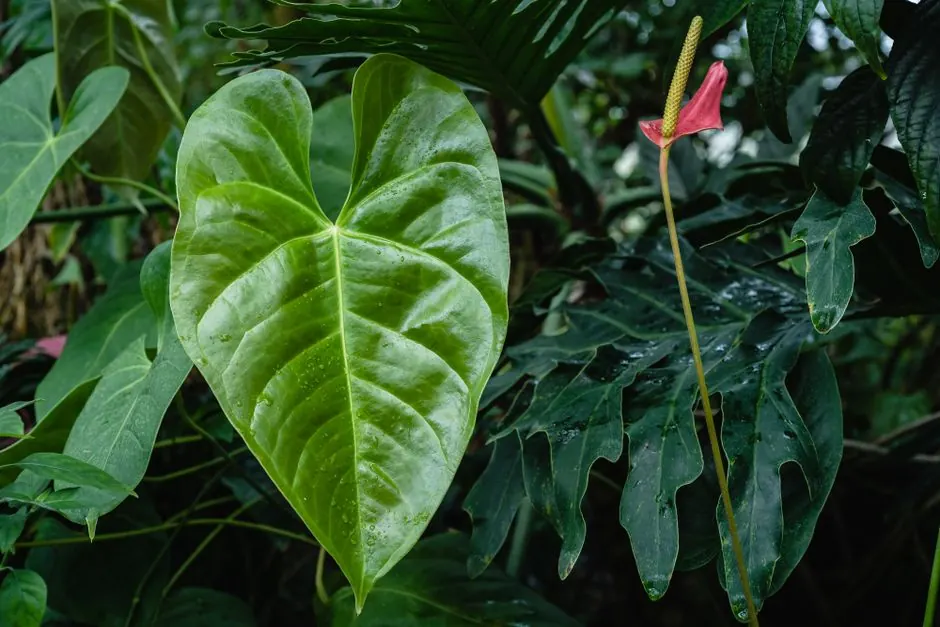
Velvet and strap-leaf Anthurium species are true epiphytes or hemiepiphytes in the cloud forests of Colombia, Ecuador and Central America, where they root into moss and bark on tree trunks. Their roots are thick (4–6mm), often green at the tip, and wrapped in velamen, a spongy, multi-layered outer skin also found on epiphytic orchids. Velamen soaks up water within seconds of rain and then dries out, protecting the living core of the root; kept permanently wet it breaks down, turns translucent and lets Pythium and Fusarium straight in.
In cultivation, a healthy Anthurium will send many of these roots along the surface of the mix and out over the rim of the pot. That is normal behaviour, not a sign that the plant needs a bigger pot. Those aerial roots are looking for something to grip and for moving, humid air, which is why a top-dressing of fresh sphagnum often encourages them back down into the substrate.
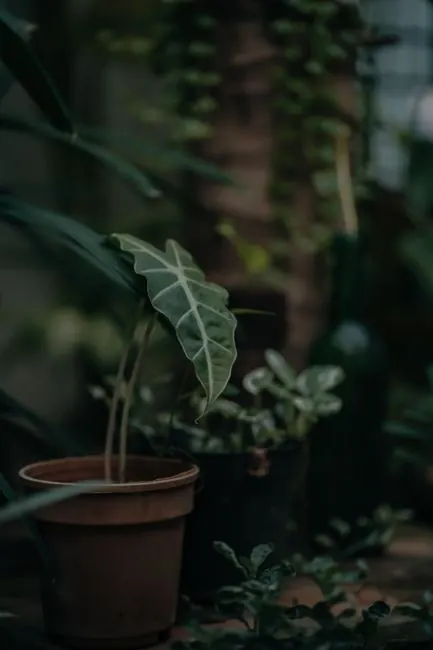
Plants this blend suits: Anthurium clarinervium, Anthurium crystallinum, Anthurium magnificum, Anthurium crystallinum x magnificum, Anthurium warocqueanum, Anthurium veitchii, Anthurium regale, Anthurium pallidiflorum, Anthurium vittarifolium, Anthurium forgetii, Philodendron melanochrysum, Philodendron verrucosum, Philodendron gloriosum.
Why this formulation works
At 44% AFP this is the most aerated aroid mix we make, and it needs to be. Velamen-covered roots are built to spend most of their time in air, drenched briefly by rain and then drying within hours. In a dense mix the velamen stays saturated, cuts off gas exchange to the root, and the root dies from the tip back; that is why so many imported Anthurium arrive in our glasshouses with sound leaves but rotted roots, packed tight in peat plugs. Our job is to give the roots a matrix that drains in seconds, holds water inside its particles rather than between them, and keeps humid air moving around every root.
The recipe is coarse on purpose. Thirty-five per cent 12–18mm Orchiata bark gives roots a surface to grip and leaves channels large enough that water drains straight through. Coco husk chips replace the tree fern fibre traditionally used for epiphytes; tree fern is slow-growing and its trade is restricted, while husk chips give the same internal water storage from a waste product of the coconut industry. Perlite at 6–9mm and pumice at 6–10mm stop the bark from bedding down as it ages, and pumice's internal pores wick water upwards from the base, so the middle of the pot never dries out as hard as the surface. Ten per cent long sphagnum strands create pockets of high humidity around root tips without filling the large air spaces the way milled moss would.
The low starting EC of 0.3–0.6 mS/cm is deliberate. Epiphytic Anthurium species evolved on trees where nutrients arrive dilute, in rainwater and leaf drip, and their roots are sensitive to salt build-up. Burnt brown leaf tips and stalled new leaves are classic symptoms of accumulated fertiliser salts. Feed little and often, at around a quarter to half of the label rate, and flush the pot with plain water every fourth or fifth watering. If you live in a hard-water area, rainwater, filtered water or a mix of tap and filtered water will keep pH in the 5.5–6.2 band for much longer.
The trade-off of a mix this open is that it dries faster, especially in a centrally heated British home where the air may sit at 35–40% relative humidity from October to April. For plants on an open shelf, choose a clear plastic pot rather than terracotta, which wicks water out of the sides, and check weight every few days. For warocqueanum, veitchii and other large-leaved species, a cabinet or humidifier bringing air to 65–80% is more useful than adding moisture-retentive material to the mix; wetter substrate is never the right answer to dry air.
When and how to repot
- Repot only when roots fill the pot or the bark has visibly broken down and smells sour, usually every 12–18 months, and preferably in spring or early summer.
- Soak the mix for 30 minutes in tepid water and drain it well; dry bark repels water at first and will otherwise wick moisture out of the roots.
- Water the plant the day before so the velamen is plump and flexible, which makes the roots far less likely to snap.
- Remove the plant and gently pull away old substrate. Healthy roots are firm and white to green under the velamen; trim any that are hollow, black or peel to a thread when pulled.
- Choose a clear pot that fits the root mass with 1–2cm to spare. Anthuriums prefer a snug pot with plenty of drainage holes or slots.
- Hold the plant at its previous depth and work the chunky mix in between the roots with your fingers, shaking the pot gently rather than pressing.
- Guide aerial roots that are already on the surface down into the mix if they reach; leave the rest in the air and tuck a little sphagnum over their bases.
- Water through, drain thoroughly and keep humidity high for two weeks while new root tips form. Feed at a quarter strength from the third week.
Open the repotting calculator pre-set for Anthurium Epiphytic Mix to work out litres, bag sizes and pot sizes for your whole collection.