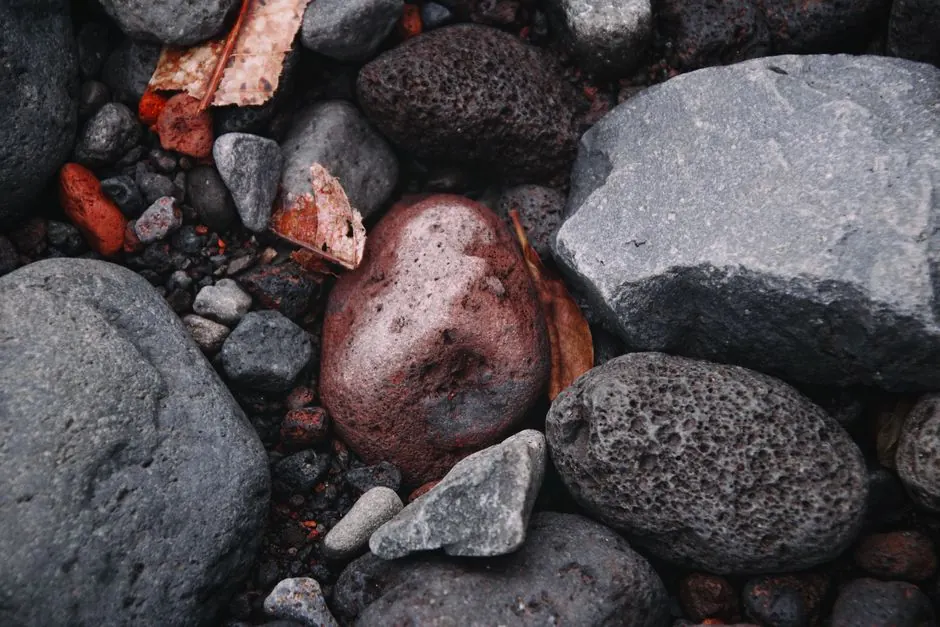
What is in the bag
- Volcanic Pumice 4–8mmMain wicking component; porous, light and permanent40%
- Zeolite 3–5mmHigh CEC; holds ammonium, potassium and calcium between feeds20%
- Lava Rock 4–8mmRough, porous surface for roots to grip; adds weight20%
- LECA (expanded clay pebbles) 4–8mmLight, round, rigid air space that never breaks down20%
| Physical metric | Value | What it means |
|---|---|---|
| Air-filled porosity | 36% | Share of the pot volume holding air after a full watering has drained |
| Water-holding capacity | 24% | Share of the pot volume holding water at container capacity |
| pH range | 6.5–7.5 | Measured in a 1:1.5 water extract after blending |
| Particle grading | 3–8mm | Screened range of the structural fraction |
| Starting EC | <0.1 mS/cm (inert) | Low enough for tissue-culture and freshly cleaned roots |
Who it is for: root morphology
Plants moved from soil into a mineral semi-hydro setup must grow a new kind of root. Roots formed in organic substrate, often called soil roots, are adapted to a damp, crumbly medium and usually decline in the constantly moist mineral environment and nutrient solution of semi-hydro. Over two to six weeks, the plant replaces them with water roots: often thicker, whiter, smoother and more fragile, and adapted to taking up oxygen and nutrients from a thin film of solution on mineral particles.
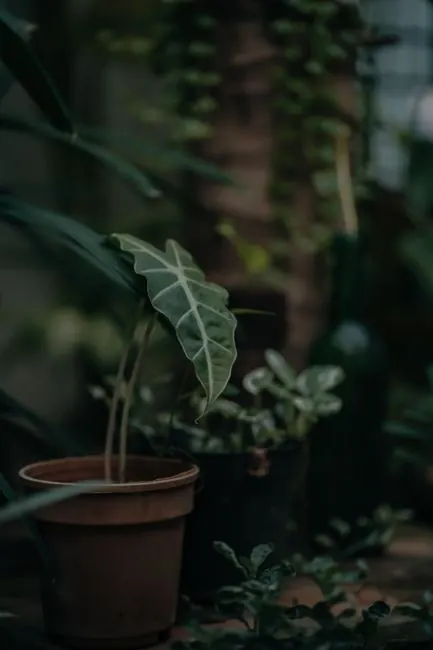
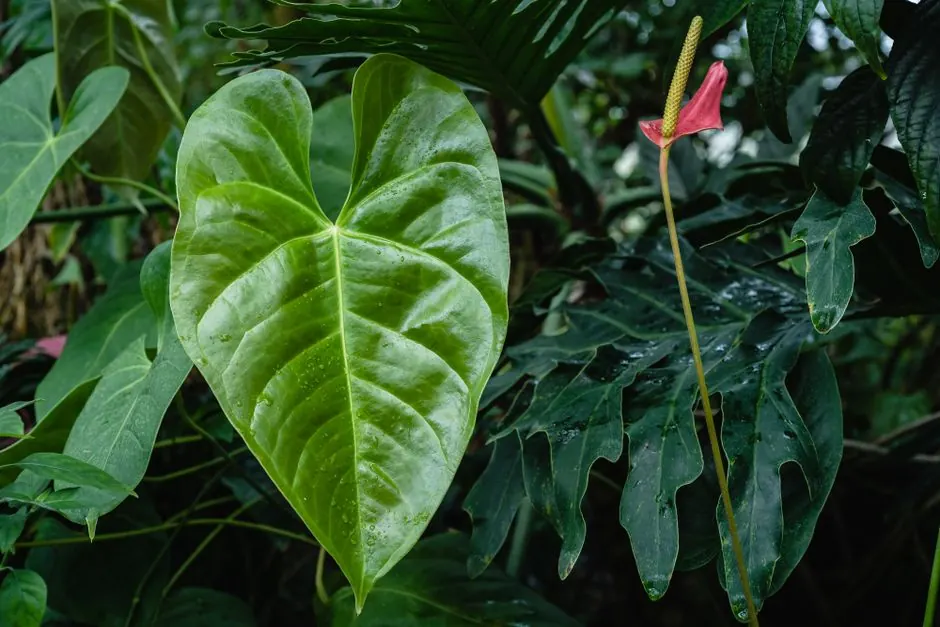
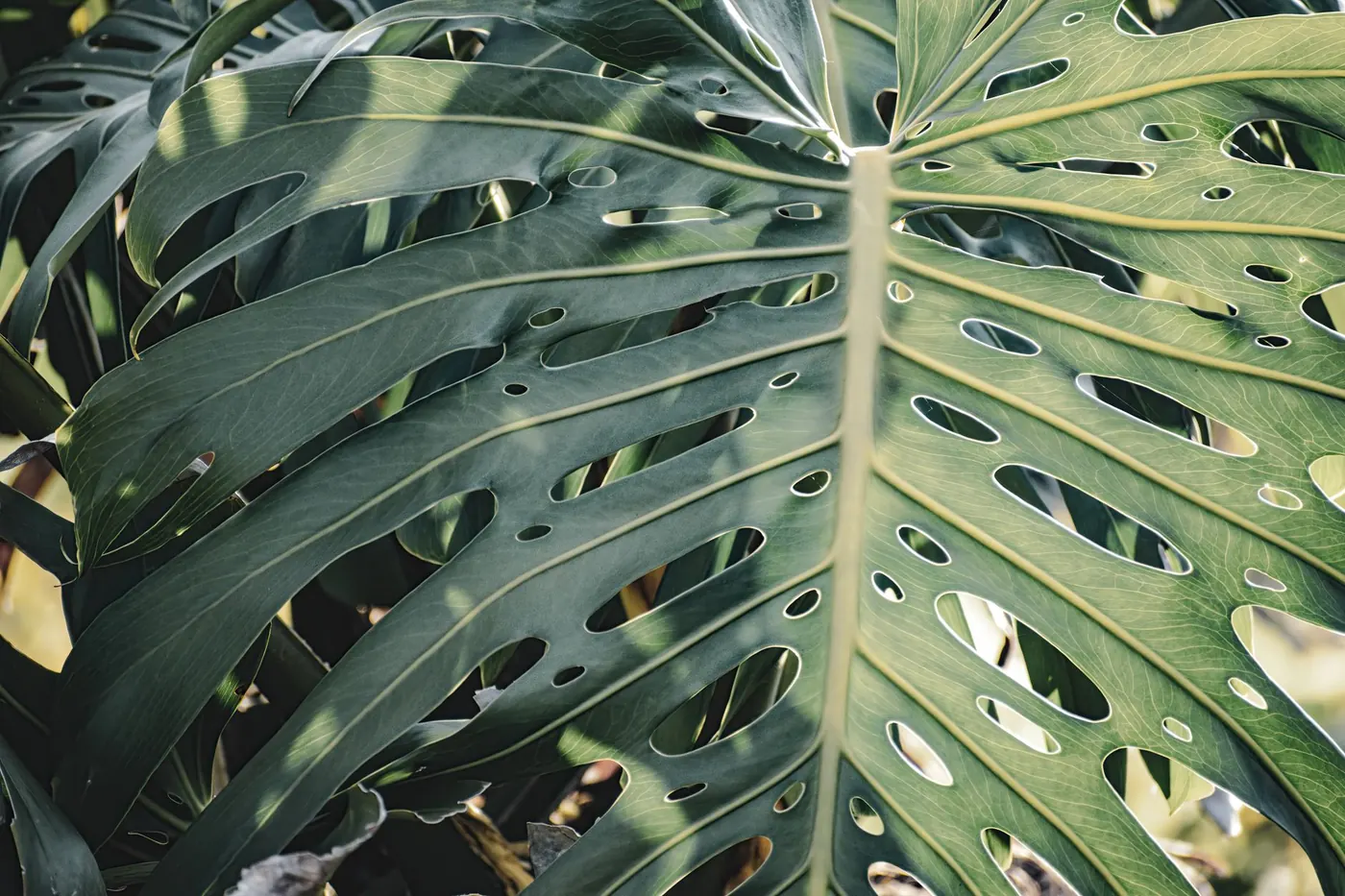
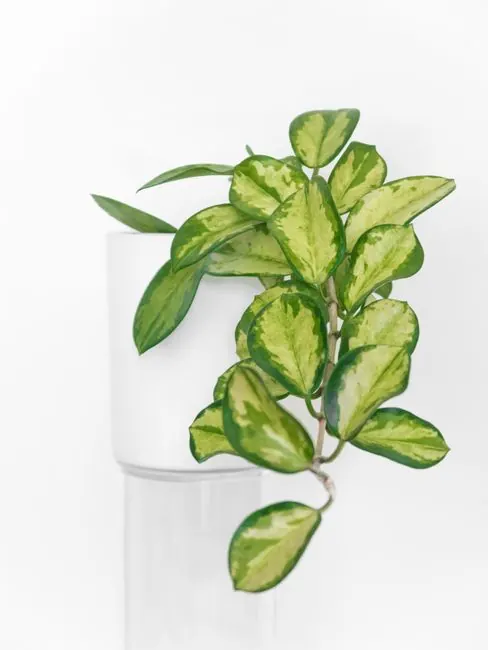
Alocasia, Anthurium, Monstera and most climbing aroids make this switch easily, as do Hoya, Epipremnum and Spathiphyllum. Cuttings rooted in water or directly in the mineral substrate skip the transition entirely and are the easiest way to start.
Plants this blend suits: Alocasia 'Frydek', Alocasia zebrina, Alocasia 'Jacklyn', Anthurium clarinervium, Anthurium crystallinum, Monstera deliciosa, Monstera 'Albo Borsigiana', Philodendron 'Pink Princess', Syngonium, Epipremnum, Scindapsus, Hoya carnosa, Spathiphyllum, Aglaonema.
Why this formulation works
Semi-hydroponics, also called passive hydroponics, uses an inert mineral substrate in a pot with no drainage holes at the base and a reservoir at the bottom. Water and nutrients wick up from the reservoir through the mineral particles to the roots. The key physics is capillary rise: porous particles such as pumice and zeolite pull water upwards through the pot, while the gaps between them remain full of air. With a reservoir filled to about a fifth to a quarter of the pot's height, the roots above it sit in a constantly moist but well-aerated zone, roughly 36% air and 24% water by volume.
Each mineral has a role. Pumice is the best wicking component and makes up 40% of the blend. Zeolite, a naturally occurring aluminosilicate, has a very high cation exchange capacity, holding ammonium, potassium and calcium between feeds and releasing them gradually, which buffers the roots against swings in solution strength. Lava rock is heavy and rough, giving roots a surface to grip and anchoring top-heavy plants. LECA, lightweight expanded clay aggregate, is made by firing clay pellets in a kiln; it adds light, round, permanent air spaces. On its own, LECA wicks poorly in larger sizes, which is why we blend it with smaller porous particles rather than sell it as a semi-hydro substrate on its own.
Because the substrate is inert, with an EC below 0.1 mS/cm, everything the plant receives comes from your nutrient solution. Use a complete hydroponic or semi-hydro fertiliser that includes calcium, magnesium and micronutrients, at an EC of around 0.6–1.2 mS/cm for most aroids. The pH of the solution should be around 5.8–6.5; in hard-water areas, tap water may need a pH-down product or dilution with rainwater. Salts build up as water evaporates, so flush the pot with plain water every two to four weeks, pouring several times the pot's volume through it to wash out accumulated minerals.
The advantages in a British home are considerable. With no organic matter, there is nothing for fungus gnat larvae to eat, and the mix never decomposes, compacts or turns sour. It also removes much of the guesswork from watering: you simply top up the reservoir when it is empty, typically every one to two weeks. The trade-off is that you must manage feeding carefully, and roots will stall if the reservoir is kept full permanently; let it run dry for a day or two before refilling so the lower roots get a pulse of air.
When and how to repot
- Rinse the mineral substrate thoroughly in a sieve or colander to remove dust, then soak it for a few hours in plain water so the porous particles are fully hydrated.
- Choose a pot without drainage holes or a semi-hydro pot with a reservoir. If using an ordinary clear pot, drill a single small hole about a fifth of the way up the side to set the reservoir level.
- Remove the plant from its pot and wash all the old substrate off the roots in tepid water. Cut off any roots that are brown, mushy or hollow.
- Set the plant in the pot at its previous depth and fill around the roots with the damp mineral substrate, tapping the pot to settle it.
- Fill the reservoir with plain water or a very weak nutrient solution (around a quarter strength) for the first two weeks while the plant adjusts.
- Expect some old soil roots to die back over the first few weeks. Keep the plant warm and in bright, indirect light, and increase to full-strength nutrient solution once new water roots appear.
- Top up the reservoir when it is empty, letting it run dry for a day or two first, and flush the whole pot with plain water every two to four weeks.
Open the repotting calculator pre-set for Mineral Semi-Hydro Mix to work out litres, bag sizes and pot sizes for your whole collection.