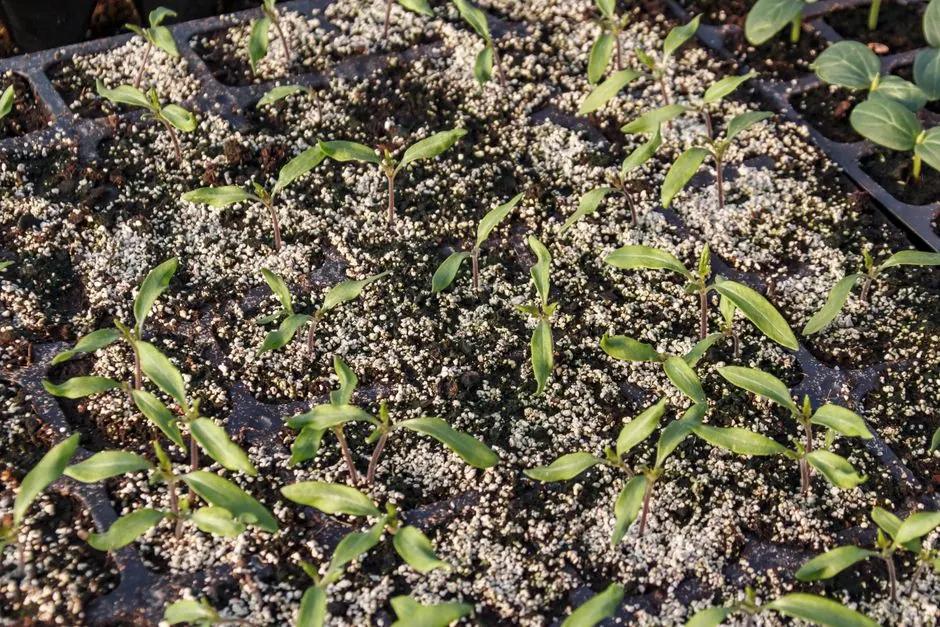
Growing a plant on from a baby is the most economical way to build a collection, and for many genera it is also the most rewarding. A 6cm Philodendron melanochrysum adjusts to your room as it grows rather than having to adapt from glasshouse conditions as a mature plant. Our starters are rooted, established in our own peat-free mix and acclimatised on our benches, so you are not buying an unrooted cutting or a fresh plug straight from a laboratory.
What a baby plant is, and is not
A baby plant here means a rooted juvenile in a 6cm or 9cm clear slotted pot, usually with two to five leaves. It started as a tissue culture plantlet or a cutting and has spent at least six weeks on our benches after rooting, long enough to show new growth in our conditions. Its roots reach the sides of the pot.
It is not a mature plant in miniature. Juvenile leaves often look different from adult ones: a baby Monstera has solid leaves, a young 'Pink Princess' may have little pink yet, and a young Alocasia leaf is a fraction of its eventual size. Variegation on a baby is a guide, not a guarantee of what follows, which is reflected in the price.
The first step-up
Leave a new baby in its pot for at least seven days, and ideally until roots show clearly through the clear walls or emerge from the slots. Then move up one size, from 6cm to 9cm or from 9cm to 12cm, never straight into a large pot. A small root system in a big volume of mix stays wet for too long, and that is how most young plants are lost.
Use the mix matched to the genus: chunky aroid mix for Monstera, Philodendron and Syngonium, corm mix for Alocasia, bark mix for Hoya, and fern mix for Calathea. A 2.5L bag at £4.99 fills around six 9cm pots. The repotting calculator works out exact volumes for several plants at once.
Light, water and humidity for juveniles
Small pots dry out faster than large ones but also stay wet longer in dim light, so juveniles need closer attention. Check them twice a week and water when the top 1–2cm is dry. Put them in bright indirect light: most aroids grow fastest at 150–300 µmol/m²/s, around 1–2m from a bright window.
Juveniles benefit from higher humidity than mature plants because their small leaves lose water quickly. Grouping several on a tray, or keeping velvet species such as Anthurium clarinervium in a clear propagation box with the lid ajar, holds 65–75% around them. Remove the lid gradually over two weeks once they have settled.
Pots and accessories
We sell clear slotted nursery pots from 6cm to 21cm at £0.95–£4.50, the same type our plants grow in. Clear walls let you see when roots fill the pot and whether the mix is wet at the bottom, which prevents most overwatering mistakes. A set of step-up pots bought with your baby plants means the next size is ready when roots appear.