Pots, Supports & Care Hardware

Clear slotted nursery pots, extendable moss poles & care hardware

The hardware we use on our own benches: air-pruning clear pots in every step-up size, moss poles that extend as the plant climbs, and the solutions we use to acclimatise tissue-culture plantlets.

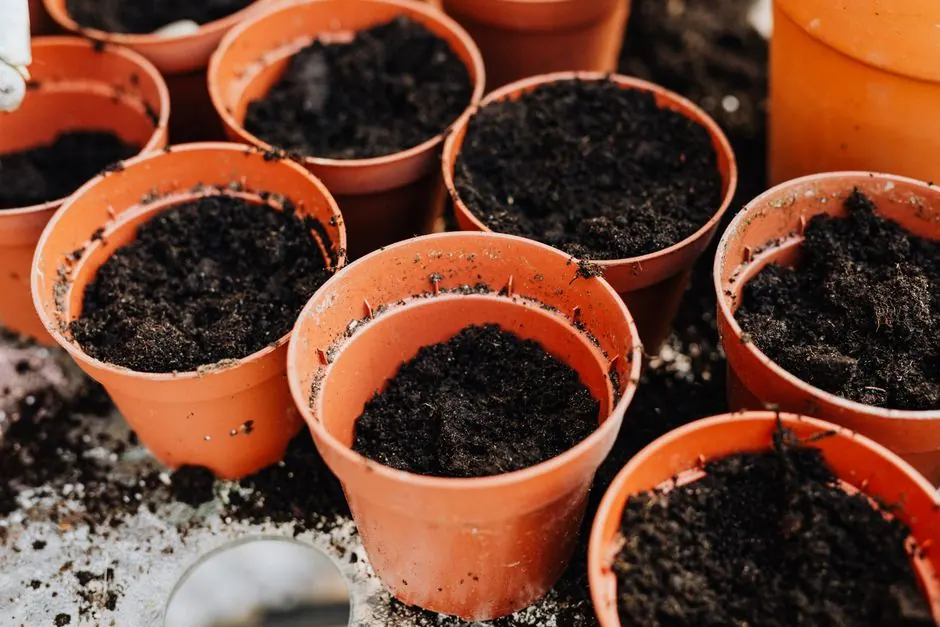
Rows of nursery pots filled with fresh substrate
Clear slotted air-pruning pots

Sizing table

DiameterFill volumeTypical plantPrice eachPack of 10
6cm0.12LTissue-culture plantlets, cuttings£0.95£8.07
9cm0.4LBaby plants, Hoya cuttings£1.25£10.63
12cm0.9LEstablished starter aroids£1.65£14.02
14cm1.4LJuvenile Monstera, Anthurium£1.95£16.57
15cm1.7LJuvenile Monstera, Anthurium£2.25£19.13
17cm2.5LCollector specimens£2.75£23.38
19cm3.5LCollector specimens£3.25£27.63
21cm4.5LMature climbers on moss poles£3.75£31.88
25cm7.5LMature climbers on moss poles£4.50£38.25

Step up 2–3cm at a time. The repotting calculator adds the right pots to your bundle automatically.

Extendable sphagnum moss poles

Our poles are D-shaped, so the flat back sits flush against a wall or the side of the pot and the rounded face gives aerial roots the most moss to grip. Each 40cm section clips onto the next. Pack with moistened long-fibre sphagnum, about 1.2L per 40cm, and mist the moss rather than the leaves.

ItemMoss neededPrice
40cm D-shaped pole1.2L£8.99
80cm extended pole (2 sections)2.4L£14.99
Extension section1.2L£7.49

Tissue-culture acclimatisation

X-Vitro root conditioning solution (£4.99) is a dilute rooting and microbial supplement for plantlets coming out of agar. Our clear humidity domes (£4.99 small, £9.99 propagator size) hold 90%+ humidity for the first week and have adjustable vents for the weaning schedule in our 28-day deflasking protocol.

Root-zone care

  • Enzyme root cleanser (£6.99): breaks down dead root material after a rot rescue without harming live roots.
  • Moisture meter (£9.99): a long probe for 17cm+ pots where the clear wall is hard to read.
  • Sticky yellow traps (£3.49 for 10): early warning for fungus gnats and thrips.

Why we prefer clear pots over terracotta for aroids

Terracotta wicks water out through its walls, which helps if you overwater but dries small pots too fast in a heated British flat. Clear pots let you see exactly what is happening and water by evidence instead of by schedule. The full comparison is in our pot guide.

FAQs

Questions we are asked most

Still unsure? Email care@growtropic.co.uk with a photo of the plant and its roots — the nursery team replies Monday to Thursday.

Why clear pots?

You can see moisture and roots without unpotting. Damp substrate is darker; dry substrate is pale. White, firm roots against the wall mean a healthy plant; brown or absent roots mean you are overwatering. The slots in the base and sides also air-prune roots so they branch rather than circle.

Do roots mind light through the pot?

Some algae may grow on the inside of the wall in bright light, which is harmless. Most growers stand clear pots inside a decorative cachepot and lift them out to check. Epiphytic roots such as Anthurium and Hoya are used to light and cope well.

How do the extendable moss poles work?

Each section is a D-shaped mesh tube with a flat back against the wall or pot side. You pack it with moistened long-fibre sphagnum, insert it at repotting, and add another section on top when the plant reaches the top. Aerial roots grow into the moss and the plant sizes up its leaves.