- Fungus gnat larvae live in the top 2–5cm of moist organic substrate; dry that layer and their lifecycle breaks.
- Steinernema feltiae nematodes and the soil mite Stratiolaelaps scimitus kill gnat larvae and thrips pupae in the substrate.
- Amblyseius swirskii and Amblyseius cucumeris hunt young thrips on leaves; swirskii needs warmth above 20°C.
- Phytoseiulus persimilis eats only spider mites and needs humidity above about 60%.
- Stop all pesticide use for several weeks before releasing predators, and quarantine every new plant.
Identify first, then break the lifecycle
Most pest problems indoors come from three groups: fungus gnats in the substrate, thrips on the leaves and in the soil below, and spider mites on the foliage. Each has a lifecycle with a weak point, and each has natural enemies sold for release in glasshouses and homes. Spraying a broad insecticide kills the predators along with the pests, so the infestation returns faster than before. Biological control works the other way: remove the conditions the pest needs and add the animals that eat it.
Identification comes first, because each predator is specific. A hand lens of 10x magnification and a few sticky traps tell you most of what you need. Yellow traps catch fungus gnats and winged thrips; blue traps are more attractive to thrips. Count catches weekly and you will know whether your treatment is working long before the leaves recover.
Fungus gnats and the moist top layer
Fungus gnats, mostly Bradysia species, are the small dark flies that rise from the pot when you water. Adults live about a week and do no direct harm, but each female lays up to a couple of hundred eggs in the top few centimetres of moist, organic substrate. The translucent larvae, with shiny black heads, feed on fungi, decaying organic matter and fine roots for around two weeks before pupating in the substrate. At 20°C the whole cycle takes three to four weeks. Larvae damage seedlings, cuttings and tissue culture plantlets, and they can carry Pythium spores from pot to pot.
Fungus gnats are a symptom of a substrate that stays wet at the surface. Fine composts with low air-filled porosity are their ideal nursery. Substrate engineering removes that nursery:
- Repot into a chunky mix with high air-filled porosity that dries from the top within a few days.
- Top-dress with a 1–2cm layer of coarse pumice, grit or horticultural sand; females will not lay into a dry mineral surface.
- Water from below for a few weeks so the top layer stays dry while the root zone stays moist.
- Store open bags of substrate sealed; gnats breed in damp, opened compost bags.
- Consider mineral semi-hydro for persistently affected plants: with no organic matter, there is nothing for larvae to eat.
Nematodes and soil predatory mites
Steinernema feltiae is a microscopic beneficial nematode that hunts insect larvae in moist substrate. It enters a gnat larva through natural openings, releases symbiotic bacteria that kill the host within a couple of days, breeds inside the body and releases a new generation to search for more larvae. It is supplied as a powder or gel to mix with water and pour onto the substrate. Apply to moist substrate at 10–30°C, out of direct sun, in the evening if possible, and use the pack before its expiry date. Repeat after two to three weeks to catch larvae that hatched from eggs laid after the first dose.
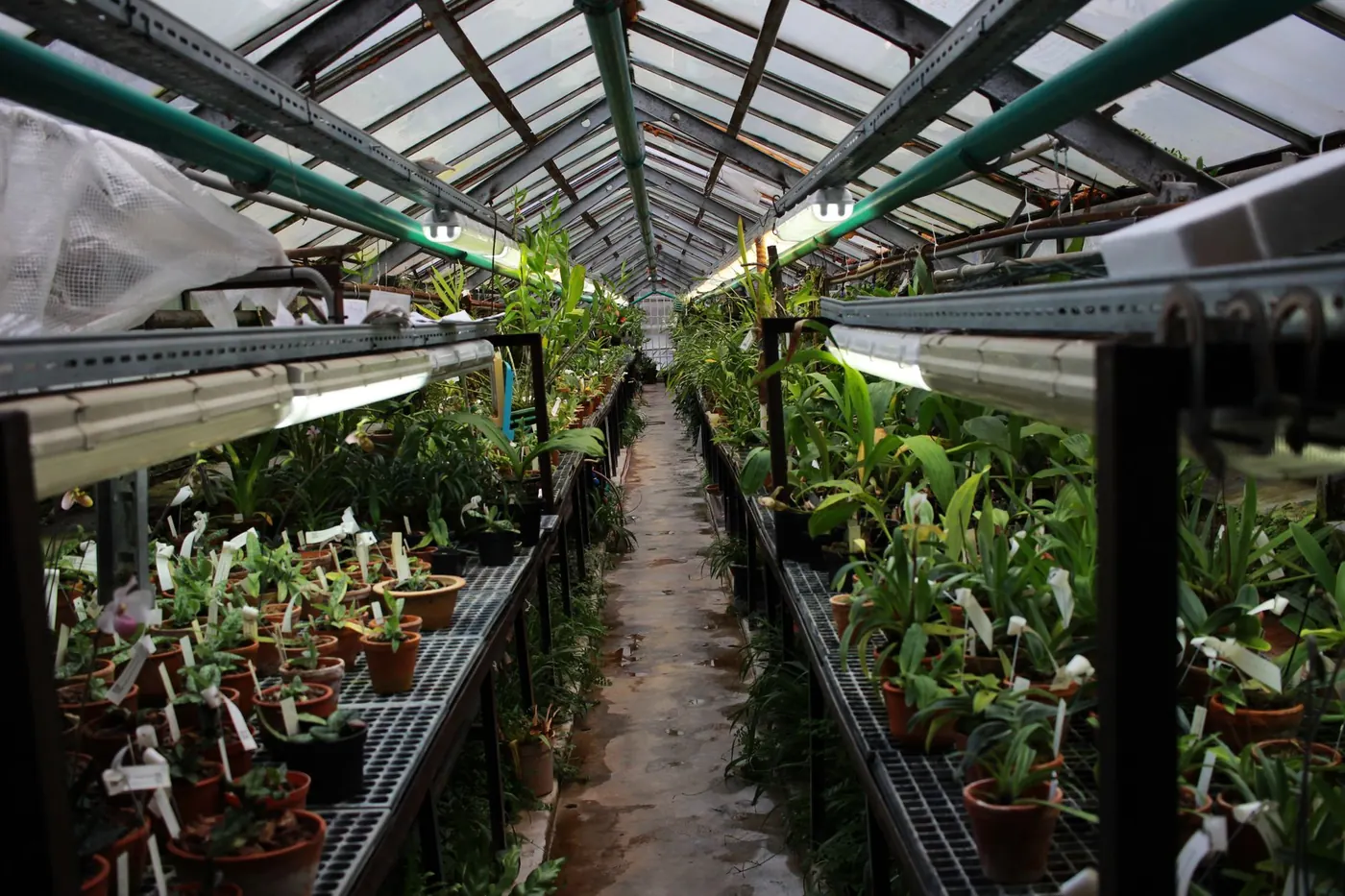
Stratiolaelaps scimitus, still often sold under its old name Hypoaspis miles, is a soil-dwelling predatory mite. It lives in the top layer of the substrate and eats fungus gnat larvae, thrips pupae and other small soil animals. Unlike nematodes, it persists for weeks without prey by feeding on other organisms in organic substrate, so it suits prevention as well as cure. We keep it established in our glasshouse benches all year.
A third option for gnat larvae is a drench of Bacillus thuringiensis subsp. israelensis (Bti), a soil bacterium whose toxin affects the larvae of flies such as gnats and mosquitoes but not other insects, mites or plants. Larvae must eat it, so it works only while it remains in the top layer, and repeat applications are needed every week or so through one or two generations. It pairs well with Stratiolaelaps, which it does not harm.
Timing matters more than product choice. Nematodes and Bti reach larvae; neither touches eggs or pupae. A single treatment therefore leaves a generation to emerge a week or two later, and that is why sticky trap catches often rise briefly after treatment before falling away. Plan on three to four weeks of combined control, with the top layer kept dry throughout, to clear a well-established infestation.
Thrips: silver scars and a soil phase
Thrips are slender insects about 1–2mm long. On aroids in the UK the commonest are western flower thrips, Frankliniella occidentalis, and Echinothrips americanus, which favours foliage plants. They rasp leaf cells and suck out the contents, leaving silvery or bronze scarring, tiny black dots of excrement and, on new leaves that were attacked while furled, distorted or scarred growth that never recovers.
The lifecycle matters for control. Eggs are laid inside leaf tissue, beyond the reach of predators. Larvae feed on the leaves. Western flower thrips then drop into the substrate to pupate, where Stratiolaelaps and nematodes can reach them; Echinothrips pupates on the leaf. A combined approach therefore covers both the leaf and the substrate.
Amblyseius swirskii is a predatory mite that eats young thrips larvae and whitefly eggs and larvae. It is highly effective but needs warmth: it works best above 20°C, which suits centrally heated homes and heated glasshouses. Amblyseius cucumeris, also sold as Neoseiulus cucumeris, also eats young thrips larvae and remains active at lower temperatures, making it the better choice for cooler rooms. Both come in slow-release sachets that hang on the plant and release mites over several weeks. Rinsing foliage under a lukewarm shower before release knocks down adults and larvae and gives the predators a head start.
Spider mites and dry air
The two-spotted spider mite, Tetranychus urticae, is barely visible without a lens. Its feeding leaves fine pale stippling that merges until leaves look dull and bronzed; heavy infestations spin webbing between petioles and leaf undersides. Spider mites breed fastest in warm, dry air, and a UK living room in winter, with the radiator on and humidity at 30–40%, suits them perfectly. At 30°C a generation can turn over in about a week. Alocasia, Calathea and Maranta are especially prone.
Phytoseiulus persimilis is a specialist predatory mite that eats nothing but spider mites. It consumes every stage and, between about 20 and 27°C, reproduces faster than its prey. It needs humidity above roughly 60% to breed well, so group plants or run a humidifier during treatment. Because it eats only spider mites, it dies out once they are gone, so it is a cure rather than a preventive: release it as soon as you see stippling, concentrating on the worst-affected leaves, and repeat if the infestation was heavy.
Releasing predators in a home
Predators need the right conditions to work. Stop all insecticide and soap sprays for at least two to four weeks before releasing, because residues kill predatory mites. Check the temperature and humidity requirements of the species against the room. Release on the day the predators arrive, and avoid sticky traps directly beside sachets, since they catch some predators too.
Quarantine is the cheapest control of all. Keep every new plant apart from your collection for two to four weeks, check the leaf undersides and the substrate surface with a hand lens, and shower the foliage before it joins the others. At the nursery, every incoming batch goes through a quarantine bay and inspection before it is released to the main benches, which is one reason our plant passport process matters. Combine quarantine with a high-AFP substrate such as the Monstera & Philodendron Mix and most gnat problems never start.
Step-by-step protocol
- Identify the pestCheck leaf undersides and the substrate surface with a 10x hand lens and set yellow and blue sticky traps to confirm what you have.
- Isolate affected plantsMove infested plants away from the rest of the collection and check neighbouring plants closely.
- Shower the foliageRinse leaves top and bottom under a lukewarm shower to knock down adults, larvae and webbing.
- Dry the top layerRepot persistent gnat hosts into a high-AFP mix or top-dress with 1–2cm of coarse pumice, and water from below for a few weeks.
- Apply nematodes to the substrateDrench moist substrate with Steinernema feltiae at 10–30°C, out of direct sun, and repeat after 2–3 weeks.
- Release soil predatorsAdd Stratiolaelaps scimitus to the substrate surface to hunt gnat larvae and thrips pupae over the following weeks.
- Release leaf predatorsHang Amblyseius swirskii sachets above 20°C or cucumeris in cooler rooms for thrips; release Phytoseiulus persimilis onto mite-infested leaves at humidity above 60%.
- Monitor weeklyCount sticky trap catches and check new leaves each week; repeat releases if numbers have not fallen within three weeks.
Symptoms vs root causes
| Symptom | Root cause | Action |
|---|---|---|
| Small black flies rising from the pot when watered | Fungus gnat adults breeding in a wet top layer | Dry the surface with a mineral top-dressing and apply Steinernema feltiae. |
| Translucent larvae with black heads in the top centimetres | Fungus gnat larvae feeding on fine roots | Nematode drench plus Stratiolaelaps scimitus; repot fragile plants. |
| Silvery scarring and black specks on leaf undersides | Thrips feeding | Shower foliage and release Amblyseius swirskii or cucumeris sachets. |
| New leaves unfurl scarred and distorted | Thrips fed on the furled leaf | Treat now; existing damage is permanent, new leaves will be clean. |
| Fine stippling and dull bronze leaves with webbing | Two-spotted spider mite in warm, dry air | Raise humidity above 60% and release Phytoseiulus persimilis. |
| Predators released but numbers not falling | Pesticide residue, wrong temperature or a heavy infestation | Check room conditions against the species and repeat the release. |