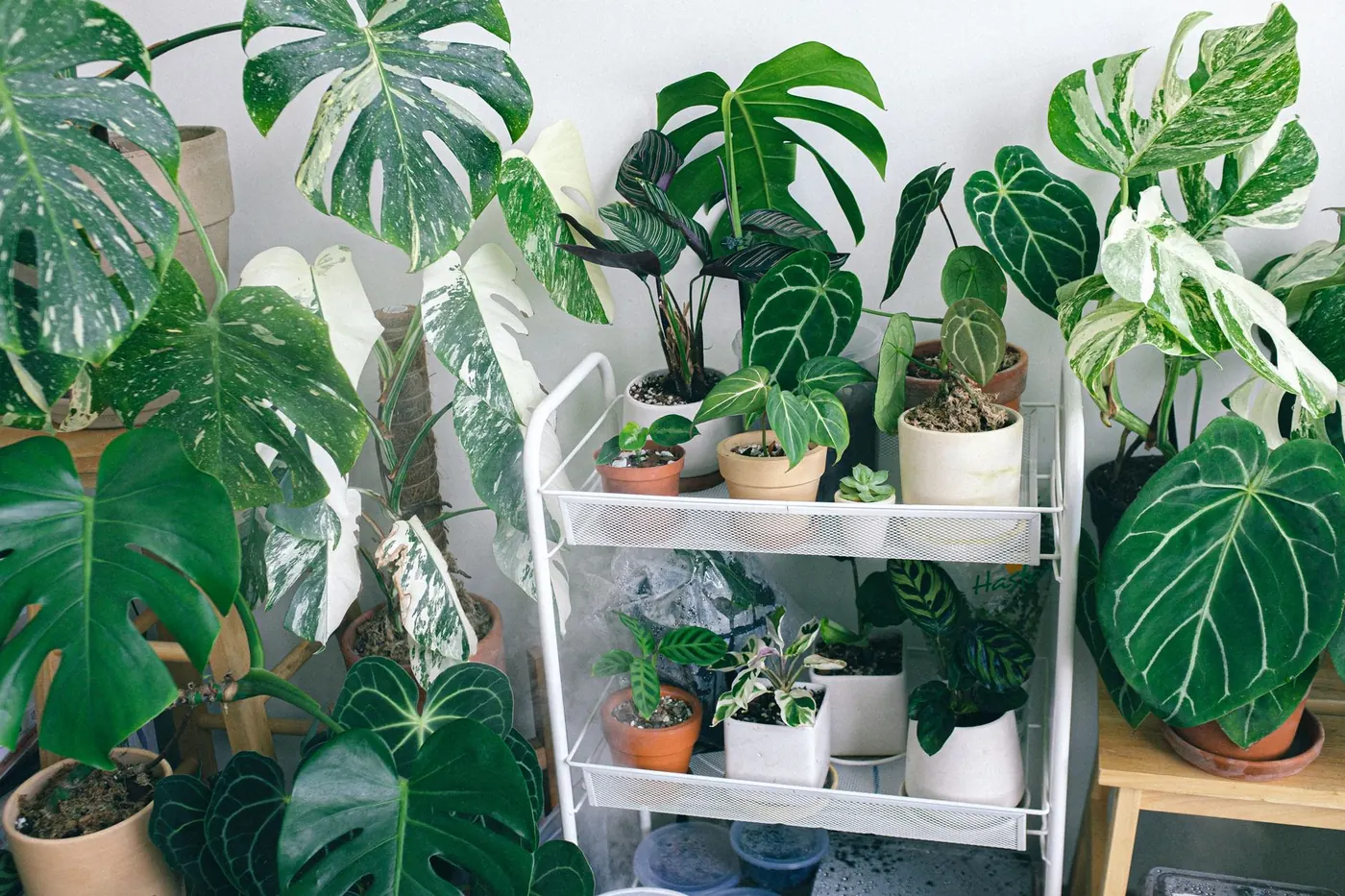
Climate, light & humidity
Scotland lies between about 55° and 61° north. At the winter solstice Edinburgh and Glasgow get around seven hours of daylight, Aberdeen and Inverness closer to six and a half, and Shetland under six, with the sun barely clearing the horizon. Between October and March, a windowsill receives far less than 3 mol/m²/day; by December it can be below 1. Tropical aroids cannot grow on that, so for anything you want to keep growing we recommend a full-spectrum LED at 150–200 µmol/m²/s for 12–14 hours a day, which gives a daily light integral of about 6.5–10. The reward comes in summer, when long days give a DLI that rivals the South. Cool summers mean scorch is rare. Indoor humidity drops to 30–40% once heating is on.
Watering on soft water
Scottish tap water is a gift for sensitive tropicals. At typically under 50 mg/L CaCO₃, and in Glasgow far lower, it carries almost no calcium bicarbonate, so it does not raise substrate pH or leave limescale on the velvet leaves of Anthurium. Calathea, Maranta, ferns and carnivorous plants are all happy with it, preferably left to stand to reach room temperature.
Very soft water does carry little calcium and magnesium. In our coir- and castings-based mixes the substrate and feed cover it, but plants in mineral semi-hydro or LECA need a complete hydroponic nutrient with calcium and magnesium, or a calcium-magnesium supplement, to avoid pale or distorted new leaves. Rainwater, plentiful in the west, is equally good.
Homes & growing conditions
Tenement flats define Glasgow and Edinburgh: thick sandstone walls, high ceilings and large sash windows that give generous light but deep window reveals and cold glass. Plants on a tenement sill can be chilled at night, particularly behind original single glazing, and radiators below the window dry the air in the evening. Set plants on a stand beside the window rather than on the sill, and move them back on frosty nights. Aberdeen's granite houses and Edinburgh's Georgian New Town share the tall windows and the cold. Newer flats have better insulation but dry, ventilated air. Because winter light is so limited, a shelf unit with LED bars is the most common setup among Scottish collectors. The light finder helps you place it.
Trade supply for local stockists
We supply independent plant shops, garden centres and florists in Edinburgh, Glasgow, Aberdeen, Dundee and beyond with barcoded 2.5L and 5L retail pouches, 25L repotting-bar sacks and shelf talkers. Substrates do not need thermal packaging, so trade orders of substrate travel year round in two to three working days. Terms start at a £150 ex-VAT opening order, £100 reorders, carriage paid over £250 ex-VAT and a 45–50% stockist margin at recommended retail. Peat-free retail mixes are particularly relevant here, with Scotland considering its own measures on peat sales. Plan a range with the trade margin planner and read our trade terms.
Office & hospitality planting
Scottish offices face the same winter light problem as homes. We plan plant schemes for offices, studios, cafés and hotels around tolerant, low-light genera such as Aglaonema, Epipremnum and Zamioculcas, and specify supplementary lighting where a scheme needs it. Displays are priced from £5.50 a month per desk plant, £15 per medium display and £22 per architectural specimen, and maintenance contracts start at £125 a month with fortnightly technician visits, substrate care, biological pest control and free replacement. Start with the scheme estimator and ask about technician coverage in Scotland through commercial planting.